• Enter your email address to subscribe to this blog and receive notifications of new posts by email.

    Join 20 other subscribers
  • Archives

  • Categories

  • Comments

    Zen Martha's avatarZen Martha on Commuting Around (and around,…
    Gypsy Tart's avatarGypsy Tart on Commuting Around (and around,…
    Raychatter's avatarRaychatter on On the FasTrak
    Miranda V.'s avatarMiranda V. on Exposed in L.A.
    Victoria P.'s avatarVictoria P. on Exposed in L.A.
    None's avatarNone on Mercury Retrograde
    Victoria Poulsen's avatarVictoria Poulsen on Mercury Retrograde
    Paul Minett's avatarPaul Minett on The Lesson of the 405
    Victoria Poulsen's avatarVictoria Poulsen on A Toll-Tale of the Blue Truck…
    Commuter Gal's avatarCommuter Gal on Welcome to the Casual Car…
    Paul's avatarPaul on Welcome to the Casual Car…
    Commuter Gal's avatarCommuter Gal on Welcome to the Casual Car…
    Victoria Poulsen's avatarVictoria Poulsen on Welcome to the Casual Car…
    Commuter Gal's avatarCommuter Gal on February Sunny Groundhog …
    All-time Driver's avatarAll-time Driver on February Sunny Groundhog …
  • Waiting for a ride

Tuesday, July 27 Remembering the Jitneys


Yawn, shiver. It’s 6:45 a.m. and 55 degrees in the Vallejo carpool line. Happily I’m quickly in a Toyota 2-door pickup truck. No heat, but it’s bearable. The driver is a large, almost sumo-looking fellow and he’s probably not feeling much chill. I plop $1.25 into the little tray between the seats – “thanks” – and we exchange comments on the state of this miserable ‘summer’ weather. KOIT radio, light rock, less talk, and light traffic too, today.

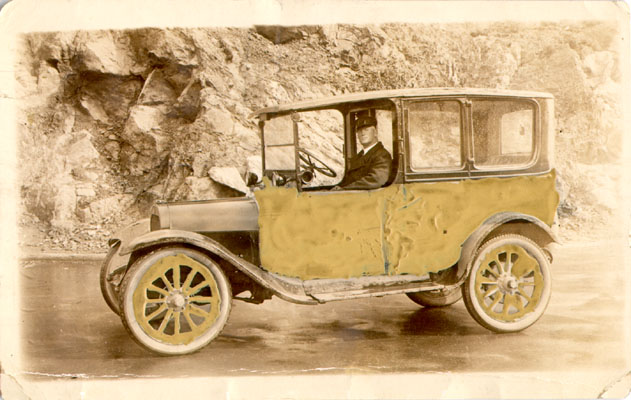
I often think about an earlier version of car-sharing that San Francisco commuters enjoyed in years past. The Mission Street Jitney. If you were around in San Francisco in the 60s and 70s (or earlier), you probably know about the Jitneys, the cars that ran up and down Mission Street, picking up passengers on nearly every corner. A ride at that time cost a dime, although the term “jitney” was slang for a nickel, which was originally the standard fee. The first time I saw a jitney I was relatively new to the City, having just moved here in 1967 from St. Louis. What I saw was an oversized black car pull up to a curb on Mission Street. A couple of people jumped out and another person jumped in. There was a clandestine, almost sinister feel to the activity, and I remember wondering if I was witnessing a CIA or FBI operation of some sort, or perhaps some criminal activity. I became even more alarmed when, a few blocks later, I saw the same thing happening again. At the time I didn’t see any signs on the cars or on the curb indicating that this was a licensed form of public transport. Later, when the jitneys were gone and I learned what jitneys were, I was sorry I’d never had the opportunity to ride in one. Over-regulation and the advent of BART finally did them in.

They first appeared in San Francisco in 1914 as transportation for the workers and attendees to the World’s Fair (the Panama-Pacific International Exposition). By 1915 there were over 1400 private Jitney operators and that number doubled within a few years as they provided transportation for suburbanites coming into San Francisco. Many people moved to Oakland after the 1916 earthquake, along with some Jitneys, and the Jitneys would transport them from various spots in Oakland to the ferries that crossed the bay.

As the years passed, Jitneys upgraded their cars and some even became mini-vans, but the spirit of the Jitney remained. A fast, personalized service with a variety of driver and car styles and a natural flexibility. Sounds a lot like the casual carpool, don’t you think?

An Early Jitney Driver
Monday, July 26 Where It All Began and Where it’s Going (maybe)


Cold Monday morning with a gloomy forecast of more of the same all week. But at least there’s no wait today, and several cars are lined up. I’m in a new Honda Accord and discover I only have five and ten dollar bills, so I dig for quarters and pass four of them up to the front seat. Traffic is moderate and we’re cruising along at 65 mph. NPR on the radio. The driver is a corporate looking fellow, 50-something, in a nice gray-striped suit with a window-pane checked shirt. An easy, quiet ride and we’re in the city by 7:50 a.m.

Ever wonder how carpooling started? The first large-scale carpooling started with war rations in the 1940s. The government had limited amounts of nearly everything during WWII, including oil. To cope with the limited fuel supply, the government imposed a 35 mph national speed limit, called “Victory Speed”. Driving clubs, or car-sharing clubs were encouraged. A marketing campaign publicized the slogan “Keep it Under 40”, and solo drivers were considered practically unpatriotic. And so car-sharing was officially born. When the war ended its popularity waned. Fuel became plentiful, prices were low, and there were no government incentives to motivate people.

In the 1970s carpooling was revived with the OPEC Oil Crisis of 1973 (gas was expensive and scarce once again). Some of you may remember the long, long lines at the pumps. I remember sitting in a line that wound around several blocks, waiting to get to a pump at a filling station near Fisherman’s Wharf. I waited nearly 2 hours and prayed that the pumps wouldn’t run dry before I got there. I was lucky that day and got gas. Some stations alternated days when they would sell gas to cars with even or odd license plate numbers. During this time then-President Nixon instituted Project Independence which included lowering the national maximum speed limit and re-routing funding from highways to mass transit. Out of this funding came the first HOV (high-occupancy vehicle lanes – or carpool lanes), which started in California. And carpooling began in earnest.

But sharing a ride appears to be motivated by money, not the environment or the desire for company while you commute. So while it’s remained a good alternative method of getting to and from work for many commuters, the numbers have declined. In large part because the government and agencies have not been marketing carpooling. And why should they? It’s not economically to their advantage.

In 1980 Regional Transportation Agencies were created in California, receiving sales tax revenues to fund their transportation projects. A fair amount of sales tax revenue comes from bus, rail, and vanpool transportation. But a huge chunk of sales tax comes from the sale of new cars. California has an estimated 32 million cars. If new cars are purchased every 4 years, then 8 million cars a year are purchased in California. This represents about $16 Billion in vehicle sales tax revenue alone. And at about 1500 gallons of fuel per car per year, there is an additional $5 billion in gasoline taxes.

Now we’re in the post-Bush economic meltdown. And California’s sales tax has taken a nose dive. Many car dealerships completely closed down within the last couple of years. Last year in California car dealers sold about 1 million fewer new cars than the previous year. Last summer sales tax declined nearly 9%, and it’s expected to decline another 10% this year with the decline continuing in 2011. This all means less money for the Regional Transportation Agencies, their projects and their salaries. BART is hurting, MUNI is hurting, buslines and ferries are hurting. And last week we saw AC Transit drivers protesting a new contract that would diminish their overtime, health insurance and pensions, in order to close a $56 million budget gap.

So why indeed should our transportation agencies encourage carpooling? Every passenger in a carpool represents the possibility of one less car being purchased, less gas being consumed, and less sales tax. Mmm. Maybe it’s no longer the patriotic (spell that economic) thing to do.

Friday, July 23 Those Cheating Drivers


Friday again, and a light and fast commute. I’m in a very new, White Prius. It has all the extras. Riding in the front seat I feel like I’m co-piloting an airplane. The dashboard is dazzling with all sorts of messages and symbols – inside and outside temperature, a GPS map tracking our every move down the 80 freeway, a diagram of the car and the energy it’s using, and other buttons and switches that I don’t recognize. The driver is a young Asian-American girl, clad in a short black leather jacket and designer jeans. She thanks us for our dollars and says no more.

Because it’s such a light traffic day, we don’t see any solo drivers trying to use the carpool lane illegally, but on heavy traffic days, it is a fairly frequent occurrence. A few years ago the SF Chronicle did a count on cheaters. They counted 11% of the motorists cheating, and as many as 39% of drivers were cheaters on the Sterling Street Carpool Only entrance to the Bay Bridge. (Many of them slowing and looking around to make sure there were no CHP officers nearby). Over a 5-year period, the CHP issued an average of nearly 7,000 carpool ‘cheater’ citations a year on the four busiest carpool lanes: I-80 from the Bay Bridge to Hercules; I-680 in central Contra Costa county; 1-880 in Alameda county and Highway 101 in Marin and Sonoma counties. At $400 a ticket (and up), that’s an expensive ride.

There are stories about solo drivers using inflatable dummies in the passenger seats, dogs with coats and scarves in baby seats, and broomsticks with Styrofoam heads and wigs propped up in seats.

Many law-abiding drivers and carpoolers feel that there is not enough of a CHP presence to deter the cheaters; I rarely see any officers on my I-80 commute. When I do, it’s usually in the evening, but only a few times in the last year. Undoubtedly, cut-backs have trimmed their numbers.

The cheating infuriates a lot of people; 7 years ago a couple of web heads in San Jose got so upset about it they started a website – carpoolcheats.org (you can’t go there – it doesn’t exist anymore). These two guys took pictures of cheaters and published them on their website, along with pictures of their license plates. When they would spot a solo driver behind them in the carpool lane, they would pull into the next lane, then snap a shot of the lone driver as his car passed. They would then snap a shot of the license plate. The website was deluged – they were getting over 5,000 hits a day within a few weeks. Reluctantly they took the site down after they received a number of threatening letters and were even pursued and harrassed on the freeway. One enraged cheater chased them for several miles and hurled his ceramic coffee mug at their car. And the CHP told them they couldn’t use the photos to prosecute cheaters with anyway. “We need to witness the violation in person in order to issue a ticket,” CHP said.

One recent frustration of drivers since the July 1 tolls began has been the deluge of non-carpooling cars flooding the carpool lane minutes before the Bay Bridge converts to a regular lane at 10 a.m. weekday mornings. Apparently many of these cars hit their brakes at 9:58 and 9:59 a.m., waiting for the lane to convert, creating traffic jams and chaos and making the legit drivers crazy and angry.

The things we do out there on the freeway! Here’s the weekend. Enjoy. CG

Wednesday & Thursday, July 21 & 22 and Carpool, the series!


More of the same on WEDNESDAY morning (gray skies, chilly wind) except that there’s a very long lineup of cars, about 20, waiting. Few riders. I’m in the front seat of an Infinity with a pleasant young guy at the wheel. I tuck a dollar into the cup holder. He thanks me and says, “Gotta pay for those budgets.” He sounds dubious about how the money is spent, and I agree with him when he comments,”Those bridges bring in a lot of money.” I’m about 30 minutes later than usual which may account for the very heavy traffic. This lovely car has a compass which tells us we’re going East, Southwest, and an outside thermometer that reads 55 degrees.

THURSDAY morning’s ride is a Honda CR-V. A no-nonsense red-haired lady is driving. The passenger in the rear meekly offers her $1.25, which the driver sternly inspects and tucks away. I put $1 in the cup holder. No comment. This weather will never change. It is like a time loop that keeps repeating – cold – gray – the 80 freeway. We slog along toward the city, covered in a gray flannel blanket of fog. The driver slips her transponder out of a silver envelope as we approach the toll plaza. I ask her if it is new and she says, “Yes, I didn’t want one before the carpool toll started. I had one 10 years ago and they charged me for toll during the time I was out of town on vacation for 2 weeks. Took 6 months to get the credit.” She says you have to check your FasTrak bills on a regular basis to be sure you are being charged correctly. There’s some advice from the world of no-nonsense to you.

Now here’s some very good stuff and nonsense, too. And something fun for you to check out while we’re waiting for the weather to warm up – a British weekly internet TV show called CARPOOL. Yes, it’s true, and it’s a very clever idea created by British actor Robert Llewellyn. Each segment is a half-hour interview, done in a car, with a well-known personality or celebrity (well, well-known in the U.K., anyway) from the fields of science, theater, tv or technology. Llewellyn produces the show and interviews the guest celebrity while he drives them somewhere in his car. The information is fascinating and as a carpooler you will find it a very familiar setting. Besides the novelty of watching someone driving on the ‘wrong’ side of the car and road!

You can view the series on this link: http://www.llewtube.com

Tuesday, July 20 You get what you pay for


A cold and windy 50-degree morning in Vallejo. Many cars and a few riders. I don’t know if my fellow riders are dazed or just rude. As I walk up to where the line begins several riders just walk right past me, getting into the cars that are lined up. I and the fellow right behind me look at each other and shrug. “Anarchy in the carpool line,” I say and we both laugh and get into a shiny new Toyota Corolla. Cozy warm inside and the lady driver gives us a pleasant greeting. We each give her $1. “We need the money for safe bridges,” she says. “Well, that’s the party line,” I comment. “I’d like to see the budgets for those safe bridges and over-runs.” No comment from either of my companions. Okay.

Off we go and this mild, very suburban and mellow looking plump lady hits the freeway at 70 plus mph! She’s driving like a maniac. As we hurtle down the 80 Freeway a small truck pulls out in front of us to join the carpool lane. The driver does not slow down until I gasp and then she tailgates the guy. Near Berkeley all the lanes are full and moving at about 45 mph, and I can breathe easier.

There are a number of stories carpoolers tell about drivers they wish they’d never been in a car with – check out ridenow.org, a great site that gives good information on car pooling in the bay area and has a great message board with listings of dangerous drivers, including car descriptions and license plate numbers. Our lady today should certainly be on that list. Unfortunately, when I’m in a hurry in the morning, and waiting in the carpool line, I just don’t pay attention to people’s license numbers, and even though I describe drivers and their cars in this blog, I seldom recognize anyone I’ve ever ridden with. Well, there are a few that stand out in my mind.

I like this quote from an unknown author: “It takes 8,460 bolts to assemble an automobile, and one nut to scatter it all over the road.” Avoid the nuts. Pay your toll, cross your fingers and be nice. CG

Monday, July 19 Other bridges, other woes


An easy beginning to the week – few riders, many cars. My ride from Vallejo is a Honda Civic with a petite Latina at the wheel. The other passenger and I each give her a dollar bill which she graciously accepts and thanks us for. As we leave the north bay behind we move from a summer morning into late autumn. The sky darkens, the air chills and it’s more like early winter as we move closer to the City. The view of Alcatraz from the Bay Bridge looks like a dark cold tomb. But the fog will lift, the sun will rise and the tourists in their shorts and tank tops will warm up. Traffic’s heavy and the toll gates are packed.

Across the bay at the Golden Gate Bridge, the Marin carpoolers who are still reeling from their newly imposed $3 toll, are facing their first day with FasTrak only – no more cash allowed for carpoolers. They were given 3 weeks after the July 1 toll began to either pay with cash or FasTrak. Plus they have to go through a staffed lane, so that their carpool status can be verified. The Golden Gate Bridge Authority says about 2% of their bridge traffic is carpool. They are planning to make $1.3 million a year in additional revenue from the new $3 toll, which will go towards replacing a $132 million budget deficit over the next 5 years. Yikes. – CG

Friday, July 16 Days of Contention


Casual Commuters lining up in Lincoln Park, San Francisco

A friend sent me this very funny photo and I had to pass it along. I need a laugh these days. Commuting has not been much fun lately, not that it ever really was, but it used to have a more comfortable, friendly feel about it. And that is going, going, maybe gone.

This issue of paying or not paying got to me last night. I waited at the Beale Street carpool line for nearly 45 minutes. As I was waiting I asked the rider behind me if he paid toll and how much. “$1.25” he promptly replied. I said “Do you realize that if both riders pay $1.25 the driver pays nothing at all?” “Oh no”, he quickly said. “The driver has to pay for the transponder.”

Before I could reply that the transponder does not cost you money, just the toll, our ride pulled up – a new BMW. As we got seated the rider I’d been talking to, now in the back seat, handed over his $1.25. I got buckled in and laid $1 on the cup rest area. The driver tapped her fingernail on my dollar bill and said, “Do you have a quarter?” When I reluctantly got it out she said with a sarcastic tone, “Thanks, this is really costing me a lot of money.”

A new BMW costs upwards of $50,000. The driver spent a good portion of what seemed a never-ending ride (heavy traffic, rear-enders) to Vallejo talking about the wonders of her BMW, trips she’d taken, cars she’d rented and she wound up having a regular BMW bonding session with the guy in the rear seat. Turned out he too owns a BMW along with a couple of Hondas. These folks are financially challenged? She can’t afford to pay a third of the $2.50 toll?

I feel angry. Even before the tolls began this month, much of the time I sensed an attitude of ‘master-serf’ between drivers and riders. The drivers assuming they are the only ones doing the favor by condescending to give a ride to the huddled masses in the carpool lines. When I discussed this with my daughter, a former Vallejo-SF commuter, she said she avoided the casual carpool for that very reason – the ‘attitude’. As I’ve mentioned in some of these blogs, I’d hoped that the SHARING of the toll would create a more congenial solidarity between drivers and riders, a ‘we’re-all-in-this-together’ bond. And at the very least, the fact that the riders are putting up money for the ride should level the playing field a bit, doncha think?

As I’ve acknowledged before, the drivers do pay gas, parking, insurance, but that is not a new expense. They have always done that, and never asked for reimbursement for those expenses, that I’m aware of. And I do not mind a bit paying a PORTION of the toll. But as I attempted to explain to both the ‘I OWN A BMW’ commuters, if two riders each pay $1.25, the driver is paying nothing towards the toll. They are still getting the free ride. And yes, the transponder is billed in advance each month, but with everyone contributing to the toll, they will get at least two-thirds of that back. Had I not been so angry, I would have asked this impoverished driver why she didn’t pick up a third rider. That would have meant $3.75 towards the burden of her commute and a profit on last night’s ride. Not only was I subjected to her blathering about her expensive car, I had to listen to her choice of music, which she sang or whistled along with from time to time. Not my choice and not pleasant, even though I was paying for the ride.

Some have commented that $1.25 is damn cheap for a ride between San Francisco and Vallejo and that is true. The issue here is more than just the money or the amount of money. As a matter of fact I spend more than $1.25 each way on my commute. I also spend $4 a day on MUNI and pay for the gas to get to and from the carpool lot. Most of us at this point in history do have money issues, including myself. But in a situation like the casual carpool, started by commuters and maintained and nourished by commuters, taking advantage of a few bucks from riders really smacks of nasty, greedy, selfish behavior. Doing that is just as short-sighted and mean-spirited as the Bay Area Toll Authority’s initiating carpool tolls in the first place. And that’s what makes me mad.

This morning, Friday, was a sunny morning in Vallejo, traffic looked light, there were cars lined up and waiting. Nice and easy. I got in the back seat of an older Chrysler sedan. The couple in the front seat were having an intense conversation about kids and a crisis with a college-age child. As we neared Richmond we entered heavy fog and it looked thick all the way into the City. A splendid tall white egret was walking about in the grasses near the freeway at Emeryville looking at once magnificent and out of place in the freeway setting. The toll gates were all nearly empty. As we got onto the bridge I interrupted the conversation and asked “What is your toll policy?” Without pause, the driver said “1.25.”

Sigh. Off to the weekend. Have a good one. CG

Thursday, July 15 The commute from Vallejo


7:05 a.m. VALLEJO L o n g line of riders waiting for a ride this morning, but the weather is warming and it looks like a lovely day in the offing. I bask in the early morning sun while I wait. It takes about 15 minutes and then I’m in the front seat of a big Lexus SUV. Friendly lady driver smiles and greets us as we get in. The rider in back immediately puts a dollar in the cup holder so once again I pull out my dollar. Traffic is heavy, but moving. There’s a huge gridlock on the east-bound side of the freeway. Roadwork near Hercules has reduced the 4 lanes of traffic on the other side of the freeway to 1 lane so it’s really jammed up. A number of speeding motorcycles zoom past us, darting in and out of the lanes at about 80 mph. The driver and I agree there are more motorcycles on the road and for the most part, they drive too fast. Lite rock on the radio and little talk in the car.

I read in the Vallejo Times-Herald (July 6, “Increase in Bay Area Bridge Tolls Could Help Public Transit”) some interesting statistics about subtle changes in the Vallejo commute, post-new tolls. There was a 10 to 15 percent increase in commuting Vallejo bus riders on July 1, the first day of the new tolls, and more commuters are riding the ferries, although the count is not yet in on that. Vallejo Public Works Directory Gary Leach is hopeful that this is a trend. “We’re hoping we will see more people taking the ferry because we’ve had a reduction in riders. Less people are commuting because of the economy.” Vallejo ferry riders have diminished by about 20 percent in recent years, as the fare has gone up and jobs have gone down.

The toll plaza is paralyzed this morning, especially in the cash lane. All waiting to pay their $6 toll. We are delighted to speed past and are in the city by 7:50.

Wednesday, July 14 Riding and Counting


Several carpool rides have passed since my last blog on Monday morning. MONDAY EVENING: the return commute was nice and easy. The line in San Francisco was short and moving quickly. I squeezed into the back seat of a Honda 2-door. There was no mention of toll. The driver and rider in the front seat commute together daily. I join their lively conversation about walking and exercise, and learn that the woman passenger regularly walks the Vallejo waterfront as do I. We talk about what a great 3-mile walk it is. I did it frequently during my Bay to Breakers ‘training’. The driver says he used to jog and was in great shape, jogging around Lake Merritt in 9 minutes! He laments his out of shape condition, and we encourage him to walk the waterfront. As we pass through the toll booth his FasTrack transponder does not beep, and he says it hasn’t for awhile. He also thinks the FasTrack people are overcharging him. I urge him to call them, get a new transponder and be sure they know he uses it in the carpool lane. Before I get out of the car I leave $1 for toll which he greatly appreciates. TUESDAY MORNING: No waiting this morning and I ride in a Ford 2-door pickup truck. The driver, who introduces himself – Brian – works in construction. The truck is a company truck, so no toll worries here. He’s resigned to the tolls, “it’s the economy “, he says. “The times we live in.” We chat about family and work. A nice ride. WEDNESDAY MORNING (TODAY): I’m off to a late start. Our hot water heater stopped working last night, so my go-to-work preparations were delayed by having to deal with very cold water. Wakes you up! But there’s no line of riders today, just a long line of cars waiting and I am in the front seat of a black Mitsubishi Evolution X. It looks like there’s $1.25 already in the cup holder (from the rear seat passenger), so I add mine. The driver is a young Asian-American looking snappy in a crisp blue-striped shirt and suit pants. I see the jacket and tie in the back seat. He’s an aggressive driver, doing 80 mph and flying by the three non-carpool lanes until a Camry pulls out in front of us. True to form, he tailgates, but then traffic gets heavy in all the lanes and we’re all moving at about 45 mph to the toll area.

As I ride, I count. I am paying an additional $50 per month toll contribution – $600 a year. The BATA (Bay Area Toll Authority) estimates that the carpool toll alone will raise approximately $30 million dollars a year. The revenue from the carpool toll will go towards the seismic retrofit projects on the Antioch and Dumbarton bridges, estimated at $750 million to complete.

It will also go towards the overruns on the $6 billion (plus) cost of the Bay Bridge retrofit. Steve Heminger, Executive Director of the Metropolitan Transportation Commission, a 3-person panel overseeing the Bay Bridge Project, said “any cost over-runs on the Bay Bridge will have to be covered through toll revenue.”

The retrofit project became a priority after the October 1989 Loma Prieta earthquake. You undoubtedly remember the chilling photographs of the bridge buckling during the quake, when a motorist was killed on the east span of the Bay Bridge. In 1992 a UC Berkeley team estimated retrofit of the east span to cost up to $200 million. In 1995, Caltrans proposed replacing rather than retrofitting the bridge, due to the high cost, however the report on a replacement for the east span came in at $843 million in 1996. Go figure. $200 million versus $843 million? In 1997 Governor Wilson announced that the eastern span would be rebuilt, and workshops, design submissions, panel recommendations were in the works until June, 1998 when the Metropolitan Transportation Commission approved the bridge design at a cost of $1.5 billion. What? January 2002 saw the east span groundbreaking, with Caltrans announcing the new bridge would open in 2007. In March 2003 Caltrans increased the cost estimate to $3 billion, citing the unique scale and complexity of the project. Estimates continued to increase, until last December when the estimated cost reached $6.3 billion. Yikes. Whatever happened to that 1992 $200 million retrofit estimate?

$30 million annual revenue from carpool toll
$750 million retrofit Antioch and Dumbarton Bridges
$6.3 billion Bay Bridge rebuild

My $50 a month: chump change. In every sense of the word.

Monday, July 12 East meets West


Here I am Monday blah morning and the ride is a black Honda Accord. Sort of a glam driver. She’s wearing a wonderful green satin blouse under a military-styled short jacket with a leopard print scarf, big silver hoop earrings, long black wavy hair and foxy glasses. Lotsa style. The guy in the back seat puts up his toll money right away so of course I feel I must too. (I was actually going to do nothing this morning and see what happened). Traffic and weather are a repeat of last week: cold, gray, lite. A decent weekend, however; I think it got all the way up into the 70s.

I just read a funny piece in this week’s NEW YORK MAGAZINE (July 19, 2010, “Diary of a Cab Share”). In February of this year New York’s Taxi & Limousine Commission launched a group-rides/cab share program which allows passengers to share cabs with strangers in exchange for a fare discount. Sound familiar, casual carpoolers? Cabs pick riders up from 3 designated spots, or passengers can hail cabs with riders already in them. The fare is fixed, depending on how far you travel, all within Manhattan – $6 is the maximum fare.

The article in NEW YORK MAGAZINE was written by Beth Shapouri, a reporter who rode undercover in one of the cab share rides. Her attempts at getting the other riders engaged in a conversation made me laugh – I’ve gone through the same thing as Commuter Gal gathering material for this blog.

After several unsuccessful attempts at conversation, Beth asks the driver, “Been doing this cab-share thing long? The Driver responds “Yes, a few years. The people are nice.” Beth asks, “But no one talks?” The Driver says “Mostly they keep to themselves. People are polite.” At this one of the passengers with earphones pointedly shifts in her seat. Beth stops talking.

On-line comments on Beth’s ‘interview’ include “Were we supposed to feel scorn for your fellow riders for not wanting to talk to you? I wound up empathizing with them.” And “Oh my lord. The people are in the rideshare to save money, not because they want some morning carpool chat time. I would’ve strangled you.”

The hope for the cab share program was to decrease traffic, give the cabbies more money, and make fares less for the riders. Unfortunately, it hasn’t clicked. I don’t think the incentives are big enough and judging from the article, it sounds like NY riders don’t like the shared aspect much, anyway. My ride this morning is a silent one and I leave it at that.

More pool tomorrow. CG